
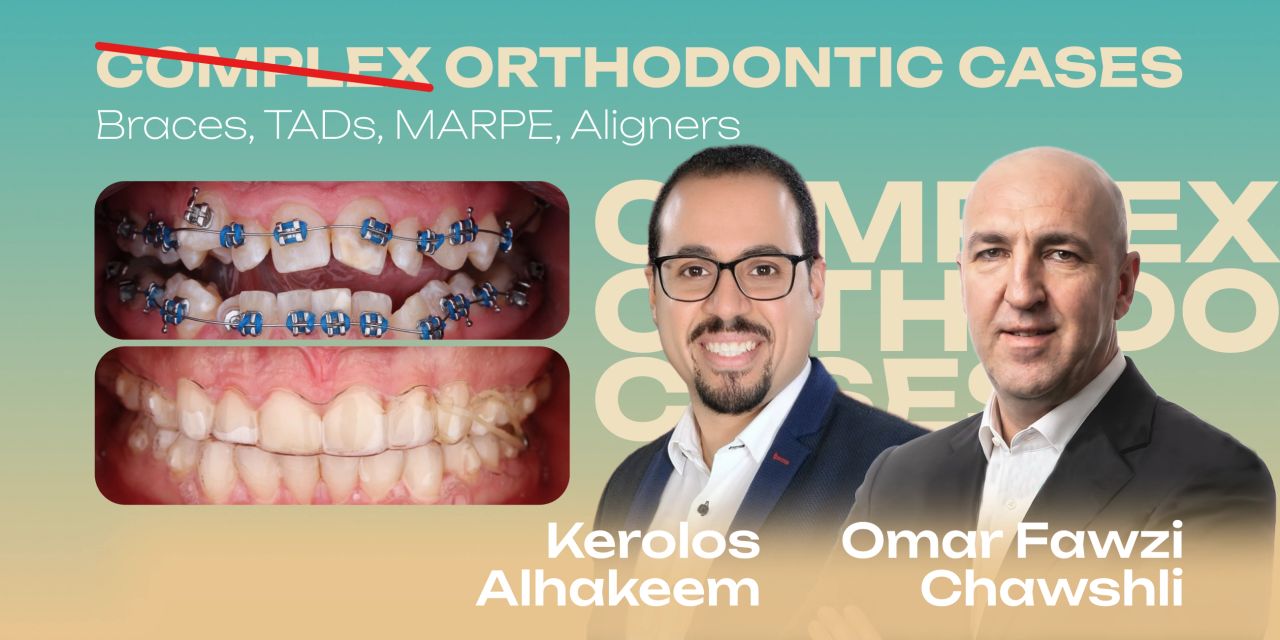
Hybrid Aligner Mechanics in Orthodontic Treatment

Hybrid Aligner Mechanics in Orthodontic Treatment
Kerolos AlhakeemLesson is included in the next courses:


Get this course and 1,200 CE Hours with Membership.
What’s included in
This lesson
Details
58min
0.75 CE Credits

English
Access to the record for Membership period
Lesson program
– Mechanical principles: how clear aligners move teeth
– The biomechanical concepts behind aligners: force delivery mechanisms
– Comparative analysis: clear aligners vs. fixed appliances
– Open vs. closed orthodontic systems and strategies for space gaining
– The clinical role of aligner attachments
– The tracking and engagement dilemma in aligner therapy
– Determining the force vectors and active push surfaces of an aligner
– Biomechanics of buccolingual tipping
– The 3 fundamental pillars of success in clear aligner therapy
– Aligner manufacturing: types of polymers
– Material science: physical characteristics of thermoplastic polymers
– Aligner biomechanics as dictated by material properties
– Evaluating movement type predictability
– Clinical efficacy: how effective are aligners at true tooth movement?
– Biomechanics of mesiodistal tipping
– What aligners can and cannot achieve
– Clinical guidelines for software overcorrection
– How to improve aligner predictability
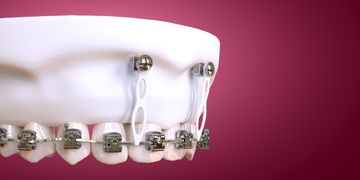
– Hybrid mechanics: the synergy of buttons and elastics
– Strategic placement of elastic attachments for maximum efficiency
– Class 2 management: anchorage control in bilateral Class 2 Division 1 malocclusions (clinical case)
– Class 2 management: midline shift correction in unilateral Class 2 Division 1 malocclusions (clinical case)
– Class 3 management: anchorage control and mechanics in reverse overjet/anterior crossbite (clinical case)
– High-angle cases: managing vertical discrepancies, extrusion, and settling protocols (clinical case)
– The push-pull dynamic: mastering advanced directional forces (clinical case)
– Biomechanical limitations of rotational movements in aligner therapy
– Hybrid derotation techniques: integrating minitubes and sectional NiTi wires (clinical case).
Lesson is included in the next courses: