


Biomechanics fundamentals of orthodontic therapy

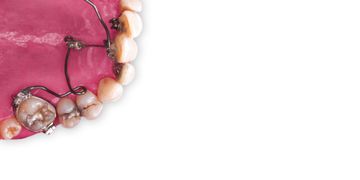
Biomechanics fundamentals of orthodontic therapy
Giorgio FiorelliCourse includes next lessons:


Details
8 lessons (16h 42min)
OHI-S International Certificate
16 CE Credits

English
Description
-
Lesson 1.Treatment planning and mechanics design
– Biomechanics in orthodontics
– The main tasks in planning orthodontic treatment
– Basic principles of mechanics
– Static and static analysis of the system
– Mechanical forces: the principle of operation in teeth movement
– Static equilibrium: basic provisions
– The law of transmissibility
– Activating and deactivating forces
– Bending and tensile forces
– Characteristics rigid and hard bodies
– Center of the mass and center of gravity
– The center of resistance of an individual tooth and a group of teeth
– Apical migration of the center of resistance
– Moment of force: trends in rotation and translation
– Localization of the center of resistance
– The phenomenon of jamming when moving teeth
– The use of cantilevers: advantages.
Recommended for: Orthodontis, General dentist.
Lesson 2.Teeth movement prediction. Force systems
– Force and components producing forces
– Mathematics in orthodontics:
- Angle of application of force, line of action of force, point of application of force
- Calculations in 2D and 3D coordinate systems
- Horizontal and vertical force components
- Summing up the effects of two forces: rules
- Calculation of the angle of the force vector.
– An example of calculating forces when moving a molar
– Analysis of dental movement by calculating vectors
– The tendency to rotation: prerequisites
– The couple of forces: definition and calculation
– Creating a moment of force in the braces
– Dental movement: the relationship between movement and the force system
– Qualitative analysis of the purity of forces
– The concept of the center of resistance
– Types of dental movement: translation, pure rotation, central rotation
– Method of calculating the geometric center of rotation
– Calculation of the distance between the center of resistance and the center of rotation.
Recommended for: Orthodontis, General dentist.
Lesson 3.Torque. Positioning of braces
– Torque in orthodontics
– Design of orthodontic treatment
– Equivalent force systems: fundamentals of the concept
– The system of forces on braces and determining appliances
– Forces applied to the body movement of the tooth
– The single force concept
– The couple of forces concept: the main provisions
– Static equilibrium in orthodontic biomechanics
– Arch activation and deactivation forces
– Deactivating force systems
– Forecasting the position of the rotation center
– Selection of the microimplant position: mechanical aspects
– Determination of the need to use anchorage: mathematical calculation
– Occlusal forces as part of the anchorage
– Requirements for anchorage elements
– Asymmetric expansion of the jaws: application of differentiated forces.
Recommended for: Orthodontis, General dentist.
Lesson 4.Anchorage. Tools for effective treatment
– The role of occlusion in anchorage
– Creation of an artificial occlusal surface: methodology and clinical recommendations
– Lower incisors as anchorage
– Equilibrium: problems of the system of forces
– Statically defined mechanics
– Single-point contact with ligature: pros and cons
– Line of action concept: cantilevers
– Straightening the position of molars: mechanics
– Indications for the use of cantilevers
– Mechanics of extrusion and straightening and the position of the canine
– Extrusion and straightening of the molar position
– Creating the reverse direction of the moment
– Advantages of cantilevers.
Recommended for: Orthodontis, General dentist.
Lesson 5.Statically determinate mechanics. Basic principles
– Statically defined mechanics: force measurement
– Application of cantilever: mechanics design
– Absolutely constant units of forces
– The concept of qualitative constancy
– Arch selection: rules and recommendations
– The problem of using circular arcs
– Configurations and direction of force
– Activation of cantilevers: technique
– Combined cantilevers: mechanics
– Combination of activation in different directions
– Cantilever support design
– Two vector mechanics: mathematical justification.
Recommended for: Orthodontis, General dentist.
Lesson 6.Geometry and alignment
– Statically indeterminate mechanics: characteristic
– Generation of forces inside the bracket groove
– 6 geometry options in orthodontics
– High and low geometry: analysis of forces and vectors
– Clinical hints when working with continuous arcs
– Practical application of the force system
– The concept of chaotic alignment
– Limits of using chaotic alignment and continuous arch
– Practical alignment rules
– Difficulties in correcting the rotation of teeth
– Alignment by activating the terminal edge
Recommended for: Orthodontist, General dentist.
Lesson 7.Geometry and bends
– Indications for bending arch
– The concept of force in arch bending
– The technique of creating a stepped bend
– V-shaped bending: systems of forces and features
– Technique of applying V-shaped bends: tips
– Changing the position of the canine with a V-shaped bend: example
– The concept of α-β activation
– Opening and closing forces
– Linear activation
– Predicting the movement of a tooth or a group of teeth
– Methods of measuring forces in the α-β system.
Recommended for: Orthodontist, General dentist.
Lesson 8.Skeletal anchorage. Mechanics of working with TADs
– Anchorage in orthodontics: definition and meaning
– The history of screws as a skeletal anchorage
– TADs: basic principles
– Biomechanics of screws
– Indications for the use of skeletal anchorage
– Position of screws: rules for choosing the optimal position
– Reasons for the loss of screws
– Screw design selection: criteria
– Direct and indirect use of screws
– Moment of force in the area of the screws: rules
– Mesio-distal movements using TADs
– Methods of asymmetric distal movement of an individual tooth and a group of teeth
– Introduction of posterior teeth: mechanics.
Recommended for: Orthodontist, General dentist.
Course includes next lessons: