
The Benefits of Optimized Attachments in Clear Aligner Orthodontics
Machine translation
Original article is written in FR language (link to read it) .
Introduction
Optimized attachments were introduced with the fourth generation of attachments developed by AlignTechnolgy®. They differ from conventional attachments in several ways, which we will discuss in this article, and also offer a clear biomechanical advantage. However, orthodontists are often unfamiliar with how they work, and some replace them with conventional attachments, which are biomechanically simpler. This article will therefore discuss their integration into the Clincheck® software, their design, and their advantages, using the example of space closure.
Integration into Clincheck®
The first step in developing a patient’s treatment plan is to complete the prescription based on the diagnosis established by the orthodontist. This step is crucial because it provides the overall guidelines for the desired ClinCheck®, and the different treatment options require the utmost clarity. Upon receipt, the prescription is analyzed by AlignTechnology® software, and an initial ClinCheck® is generated automatically. Depending on the required tooth movements, the software may or may not place optimized attachments.
Optimized attachments are variable in their positioning. It is impossible to modify or place them yourself, and the same applies to AlignTechnology® technicians. In fact, once placed, the only way to interact with them is to keep or remove them. They can only be positioned by the analysis software. Thus, when the treatment plan changes between the initial ClinCheck®, developed from the prescription, and the final ClinCheck®, the orthodontist must pay particular attention to whether they are appropriate for the final treatment plan. Root Control attachments may be necessary and will be placed by the software when a space-closure prescription is submitted, but they would, on the other hand, be unnecessary if the treatment plan is reassessed without space closure.
Their orientation is also determined by AlignTechnology® software based on the desired movement. An Optimized Extrusion attachment may, for example, be positioned at an angle to the tooth’s long axis, depending on the desired second-order movement during extrusion.
Design
Whereas conventional attachments have an attachment housing that exactly matches their shape, optimized attachments have an attachment housing that is larger than their own dimensions.
Thus, the attachment housings in the Template® will match the exact dimensions of the optimized attachment, whereas the attachment housings in the aligners will be oversized. If an optimized attachment is lost during treatment, unlike with conventional attachments, the Template® must therefore be used again to replace the optimized attachment with one that matches the exact dimensions.
This additional space is represented in the Clincheck® software by the flat part of the optimized attachment.
Furthermore, when a new Clincheck® is developed (loss of aligner tracking, finishing, etc.), the software cannot distinguish an optimized attachment from a conventional attachment based on the scan, and will therefore treat them as conventional attachments for the next series of aligners. The orthodontist must then assess the extent of the residual movement required based on their clinical experience, biomechanical considerations, and treatment objectives, to determine whether the attachments should be removed for greater predictability or can be retained for minor movements. If they are to be removed, the software will use the previous Clincheck® to identify the optimized attachments, and the practitioner can check the box “Virtually remove all Optimized Attachments (keep traditional attachments) from the impressions/scans and place new attachments as needed” at step 9 of the prescription (Fig 1 and 2).
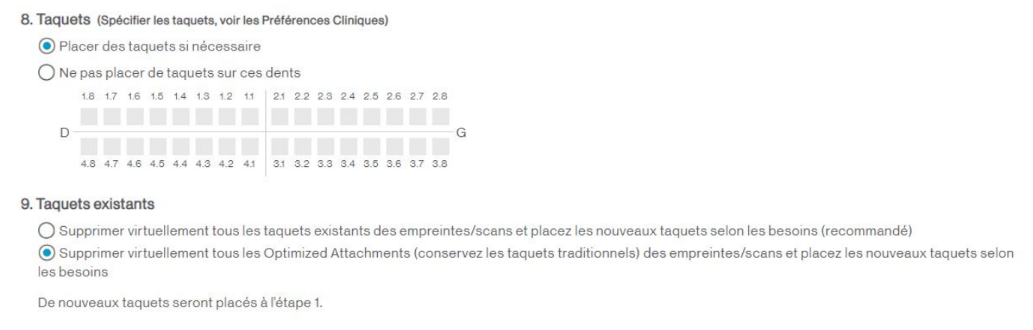
Figure 1: Lite Package additional aligner prescription form
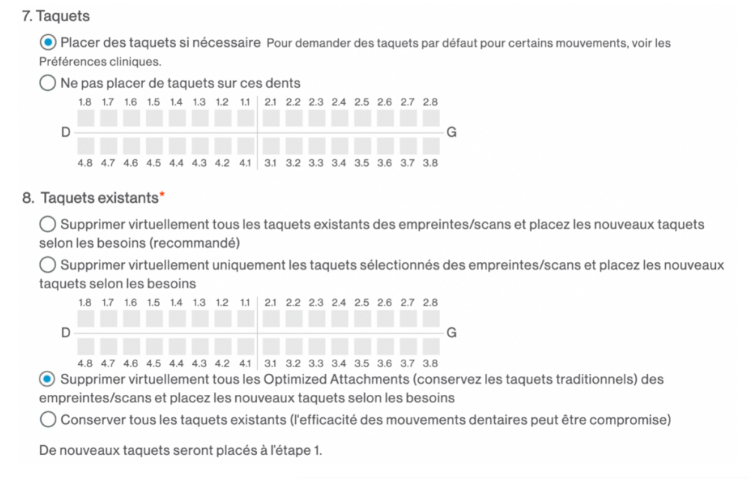
Figure 2: Comprehensive Package additional aligner prescription form
Biomechanical advantage
Optimized attachments have important intrinsic differences. They are positioned and oriented by the software according to the desired tooth movement and the tooth’s anatomy. Thus, two Optimized Root Control attachments on the same tooth surface will not always be separated by the same distance.
To explain their biomechanical advantages, we will use the example of uprighting a canine during distalization with a double Optimized Root Control attachment.
Conventional attachment
If the orthodontist needs to choose a conventional attachment to achieve this type of movement, they will naturally choose the longest possible rectangular attachment (5 mm), unless aesthetic considerations are a constraint.
In fact, canine distalization will be clinically accompanied by tip-back of the tooth in question, that is, distal rotation around the center of rotation in the anteroposterior plane, which coincides with the center of resistance in this configuration.
To control and upright the canine throughout the movement, an uprighting moment must be applied. This is achieved by applying a force couple to the rectangular attachment, made possible by the discrepancy between the attachment housing and the clinical position of the attachment, thanks to the viscoelastic deformation properties of the SmartForce® material. Simplifying the situation and assuming that the two forces applied are equal in magnitude and opposite in direction, the uprighting moment will act around a center of rotation located away from the center of resistance, at the midpoint of the segment connecting the two points of application (Fig 3).
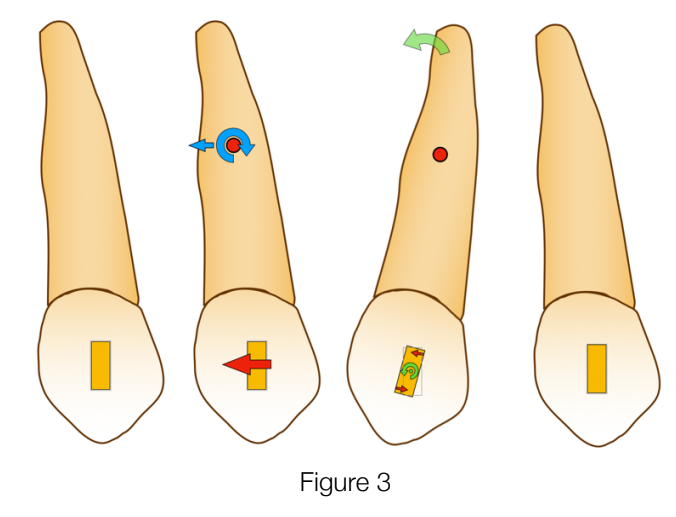
Its effectiveness will depend on the magnitude of the forces applied, as well as the distance between their points of application. In fact, the farther apart these points are, made possible by a longer attachment, the more effective the uprighting moment will be (Fig 4).
Analyzing the biomechanical situation in this way, it is logical to conclude that the most effective solution would be to separate these forces as far as possible, eliminating the central part of the attachment in favor of aesthetics while trying to maintain the best possible aligner retention. This is the rationale behind the introduction of optimized attachments.
However, it quickly became clear that an oversized space was needed in the attachment housing. We will illustrate this using the same clinical situation and placing two rectangular attachments as far apart as possible, in the manner of an Optimized Root Control attachment.
During the tip-back that occurs during distalization, the uprighting moment will not be a single moment with its center of rotation at the midpoint of the segment separating the two attachments... in fact, each attachment will generate its own moment around its own center of rotation, as in the previous situation. This will result in a complex biomechanical blockage due to the two centers of rotation, preventing the uprighting moment from being expressed (Fig 5).
The solution would be to eliminate (Fig 6):
the mesializing force in the force couple closest to the center of resistance
the distalizing force in the force couple farthest from the center of resistance
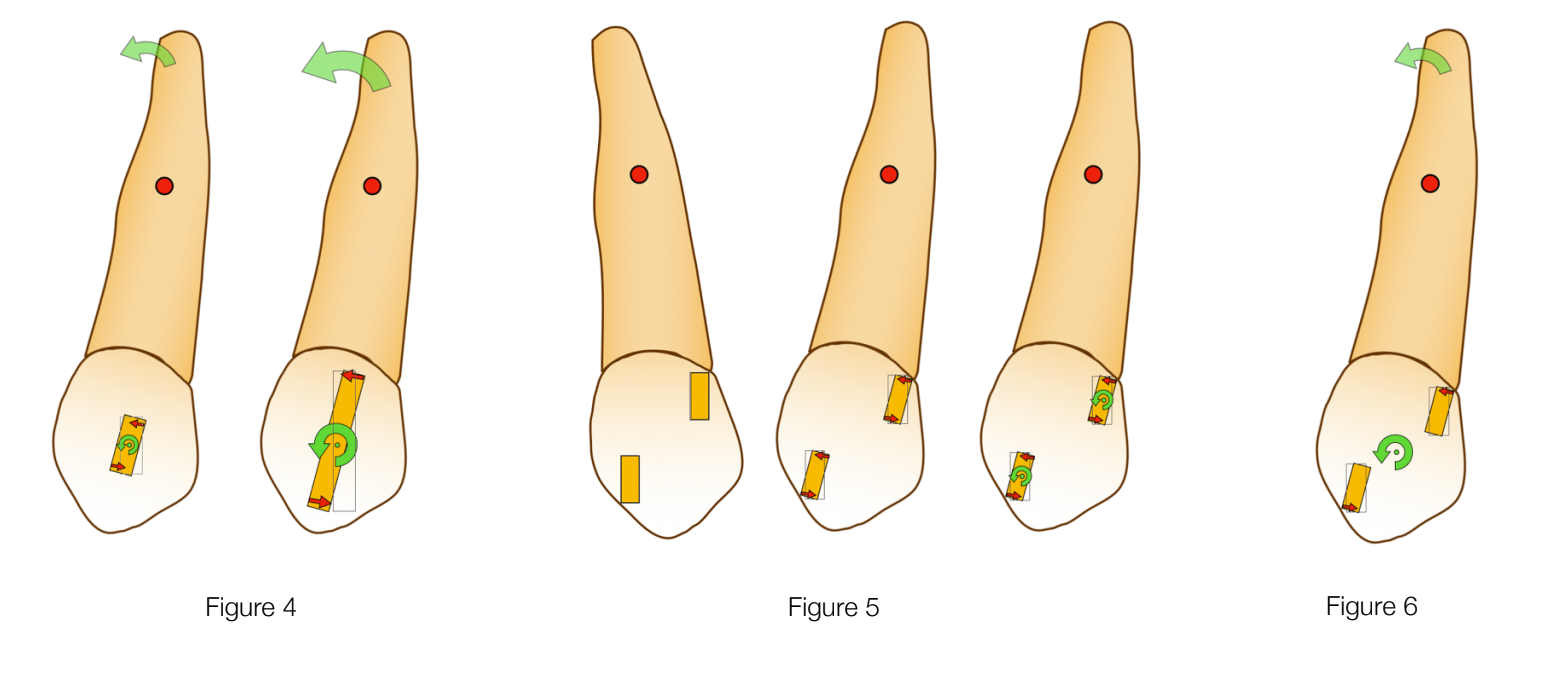
In this configuration, the uprighting moment is therefore indeed a single moment, acting around one center of rotation, and is effective given the distance between the two forces making up the force couple.
However, to eliminate these two unwanted forces, additional space must be created in the aligner so that the attachment housing does not come into contact with it and no force is applied. This space is what characterizes optimized attachments.
Optimized attachment
Optimized Root Control attachments have additional space in the aligners, represented by their flat part in the Clincheck® software. Thus, when the tooth is in a tip-back position, they come into contact with the aligner at only one point and therefore apply only one force each to the tooth. These two forces combine to form an effective uprighting couple because of the distance between their respective points of application (Fig7).
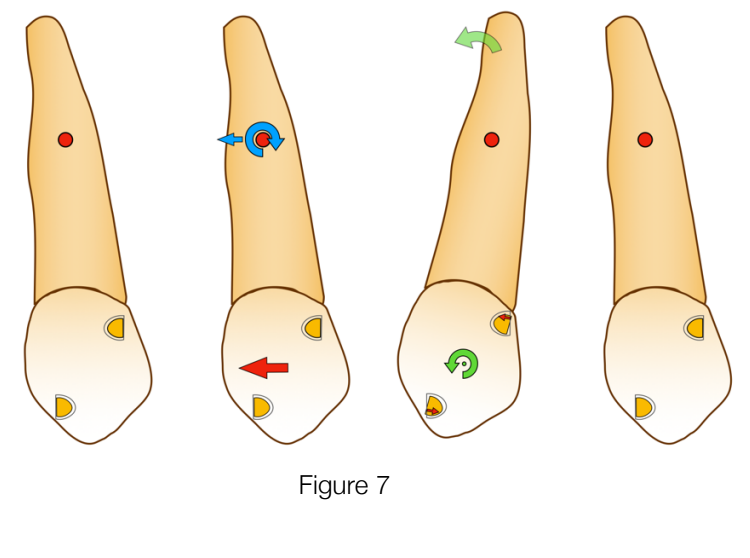
This technology makes it possible to combine biomechanical effectiveness, due to the magnitude of the uprighting couple created by the distance between the attachments, with their clinical discreteness, as they replace a rectangular attachment that would theoretically need to be as long as the distance between the two optimized attachments.
Between the initial and final positions of the teeth, the algorithm will place optimized attachments according to the type and extent of the tooth movement. These will be placed on the corresponding tooth surfaces and oriented to achieve the desired movements or prevent unwanted movements from being expressed. They can be of different types:
tipping: single or double
with single attachments, the second force in the couple is applied by a pressure point from the aligner
directly to the tooth surface
extrusion
rotation
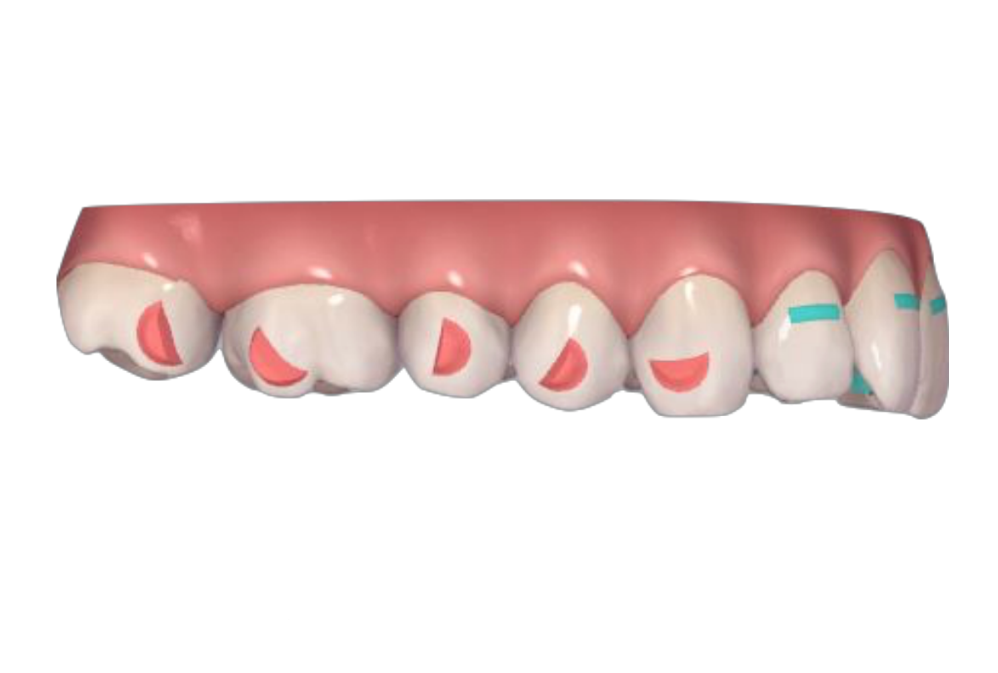
Figure 8: A pressure point on the gingival side of the premolars and canine completes the uprighting couple. The orientation of the optimized attachments depends on the extrusion required for the teeth in question.
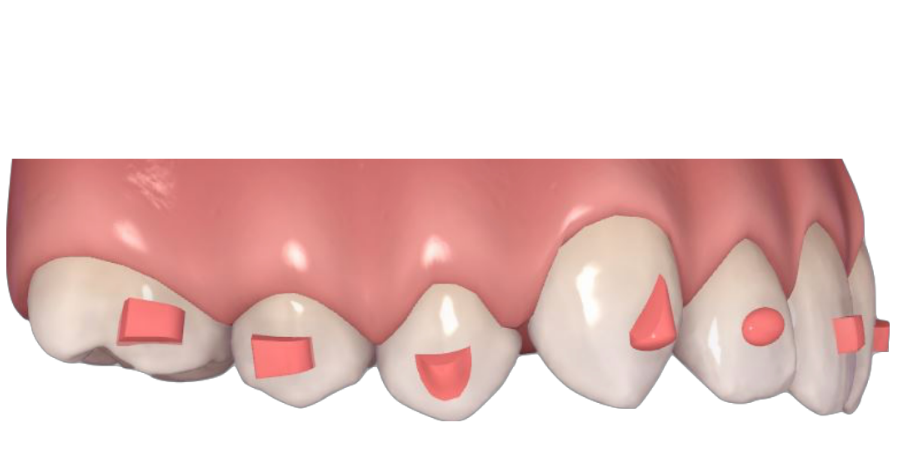
Figure 9: An optimized rotation/extrusion attachment is positioned on the canine to correct its axial inclination during distalization. The force couple is completed by a pressure point on the gingival side.
Conclusion
Optimized attachments have continued to diversify and improve through successive generations. They make it possible to extend force couples across the entire crown, rather than only across the attachment, which is limited by aesthetic considerations. There are now different types designed to achieve different clinical movements, combining biomechanical effectiveness with clinical discreteness.