

Facial Contouring with PMA-Based Products Using the Bio-Reinforcement Technique
Machine translation
Original article is written in RU language (link to read it) .
In this article, I would like to address skin aging and discuss involutional changes occurring in the dermal and epidermal layers (specifically, senile skin atrophy and dystrophy) as an indication for using methods that activate the synthesis of collagen and extracellular matrix substances by fibroblasts in the skin.
Methods for collagen stimulation in the skin include injections of poly-L-lactic acid, calcium hydroxyapatite, and polycaprolactone. I would like to present a method of collagen stimulation using injections of poly-L-lactic acid (also known as tissue replacement; accordingly, products based on the active ingredient poly-L-lactic acid are referred to as tissue-replacing products). This method is based on performing so-called bio-reinforcing injections along vectors that are anatomically and physiologically opposite to the vectors of skin aging. It is a method of restoring the skin and renewing extracellular matrix components, as well as a way to stimulate the cellular response to the injected product and support the synthesis of substances responsible for skin firmness and elasticity, including collagen, elastin, and hyaluronic acid.
Poly-L-lactic acid as a bio-reinforcing material
Poly-L-lactic acid has important properties that justify its use as a bio-reinforcing material: biodegradability and bioactivity. In our view, the most important property of poly-L-lactic acid is its biodegradation in the body, that is, biodisintegration—the breakdown of complex compounds and structures as a result of the activity of a living organism. Poly-L-lactic acid is completely biodegraded and eliminated from the body.
Bioactive substances are substances that, after implantation, form a bond between the material and the tissues; encapsulation (the cellular response) can be either minimal or pronounced. We discussed the tissue response to the injection of poly-L-lactic acid in our previous articles.
Collagen-based products and fillers with a stimulating effect are considered bioactive products. This includes all microparticle-containing products based on poly-L-lactic acid, polycaprolactone, and calcium hydroxyapatite. A bioactive and biodegradable material is characterized by the fact that, as it gradually degrades, it is replaced by the host's own tissue, and its biodegradation (breakdown) products are non-toxic.
It is precisely these bioactive and bioresorbable substances that are called collagen-stimulating and tissue-replacing.
It is assumed that, in skin atrophy, the thickness of the dermis decreases with age as a result of an imbalance between the synthesis and degradation of its components. In other words, fibroblasts synthesize fewer extracellular matrix proteins, while the activity of proteolytic enzymes that break down proteins increases. Skin atrophy is now widespread and occurs at younger ages, which is associated with premature menopausal changes, hormonal imbalances, and our lifestyle. Among the most common patient complaints are reduced skin turgor, laxity, and loss of elasticity and density.
In other words, the aim of using collagen-stimulating and tissue-replacing techniques with poly-L-lactic acid-based products is to increase skin volume in the treated area through their injection, achieve secondary replacement of the injected product volume with the patient's own tissues, and subsequently improve skin quality and density.
The product is reconstituted according to the manufacturer's instructions (for more complete information, we invite you to attend our courses). For a bio-reinforcement procedure, 9–15 ml of suspension reconstituted according to the manufacturer's instructions is used for one facial correction. When using bio-reinforcement techniques, we usually inject the product linearly in a retrograde manner, using a reinforcement technique or vertical connective tissue strengthening. A 25 G needle is most commonly used; a long needle up to 70 mm, a cannula, or a 25 G*70 or 22 G 70 mm needle may also be used, depending on the preference of the practitioner performing the procedure.
Clinical case
We present selected practical results of facial correction using poly-L-lactic acid-based products with a bio-reinforcement technique.
A 44-year-old female patient complained of skin laxity and loss of elasticity. Hyperpigmentation was also noted in the midface. Skin elasticity was tested using the Cutometer® dual MPA 580 skin testing system manufactured by Courage+Khazaka electronic GmbH (Germany). The results were measured and recorded in the patient's chart for subsequent comparison.
The first aesthetic correction was performed in July 2019 (Photo 1). The procedure used 12 ml of a 200 mg poly-L-lactic acid suspension, diluted according to the product manufacturer's instructions, using a bio-reinforcement technique. The patient was satisfied with the result (Photo 2). After the procedure, the skin became denser and fuller. Anatomical structures projecting onto the face (the contours of ligaments and fat pads) were concealed after the correction. The skin became denser in the area of the so-called jowls, and the nasolabial folds became less noticeable as the skin gained fullness.
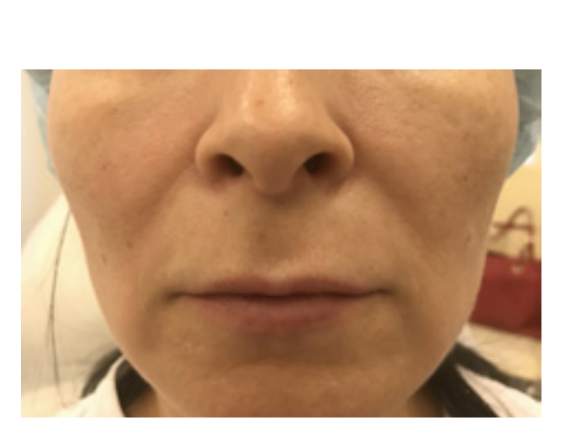
Photo 1. Patient before the initial correction
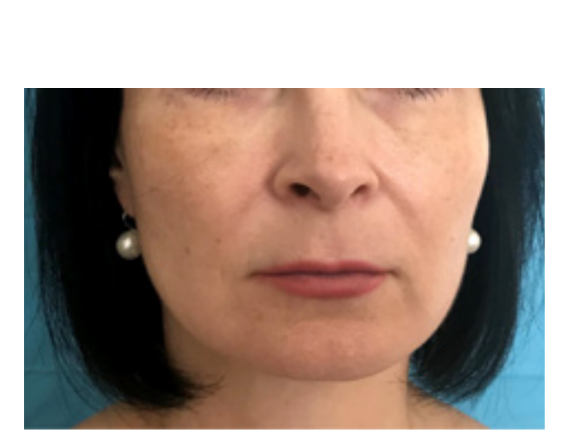
Photo 2. Patient 11 months after the initial correction
Procedure
In July 2020, 11 months after the initial correction with a poly-L-lactic acid-based product, a repeat secondary correction with a poly-L-lactic acid-based product using a bio-reinforcement technique was performed at the patient's request (Photo 3). The skin elasticity test was repeated using the Cutometer® dual MPA 580 skin testing system, and stratum corneum hydration was also measured. The results were recorded in the patient's chart. Skin elasticity had increased by 12% since the previous correction, which is a substantial increase given the patient's age.
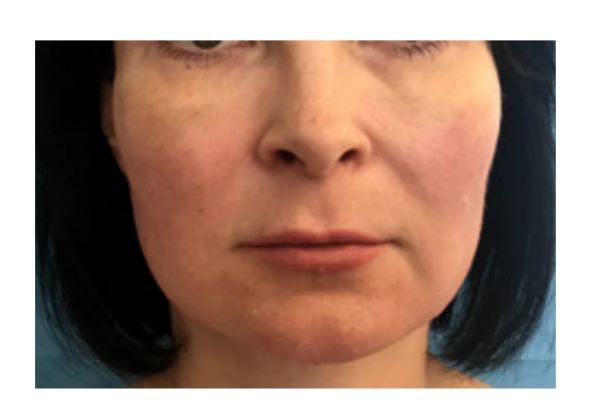
Photo 3. Patient immediately after the repeat procedure
In addition, the thickness of the skin and subcutaneous fat at the implantation site was measured using a HITACHI ALOKA PROSOUND F37 ultrasound diagnostic system before the procedure and one month afterward. The changes were recorded in the patient's chart and in the accompanying photo (Photo 4).
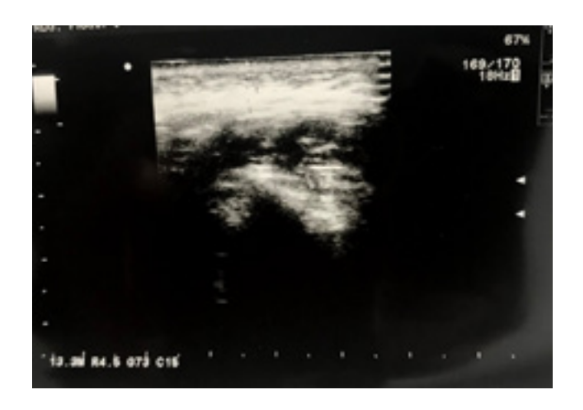
Photo 4. Measurements taken with the HITACHI ALOKA PROSOUND F37 ultrasound diagnostic system after the procedure
According to measurements of skin and subcutaneous fat thickness after poly-L-lactic acid injections using a reinforcement technique, the skin (dermis and epidermis) increased evenly by 1 mm, while the thickness of the subcutaneous fat increased by 1.3 mm.
In addition to improved elasticity, the patient noted reduced hyperpigmentation in the midface, resolution of laxity in the lower third of the face, denser skin, visually smaller pores, and smoothing of fine wrinkles. In other words, the increased fullness of the skin resulted in a visibly smoother skin texture.
Overall, the patient considered the correction results good and the results in preventing ptosis and skin atrophy more than satisfactory, and expressed a desire to repeat the correction with the same product in 10–12 months.