

Minimally invasive treatment of caries. Bulk-Fill
Machine translation
Original article is written in RU language (link to read it) .
Making restorations quickly and easily has gone from being a dream to reality. Restoring the chewing teeth using bulk-fill composites has undoubted advantages over the standard layer-by-layer filling technique. The properties of this material have been repeatedly confirmed by clinicians and the literature, which allows us to consider it as an affordable and economical option. Next, we present a clinical case from our daily practice, in which we will demonstrate the advantages of bulk-fill material in the minimally invasive treatment of caries.
You can systematize your knowledge about direct composite restorations in the online course Direct Restoration. All Inclusive .
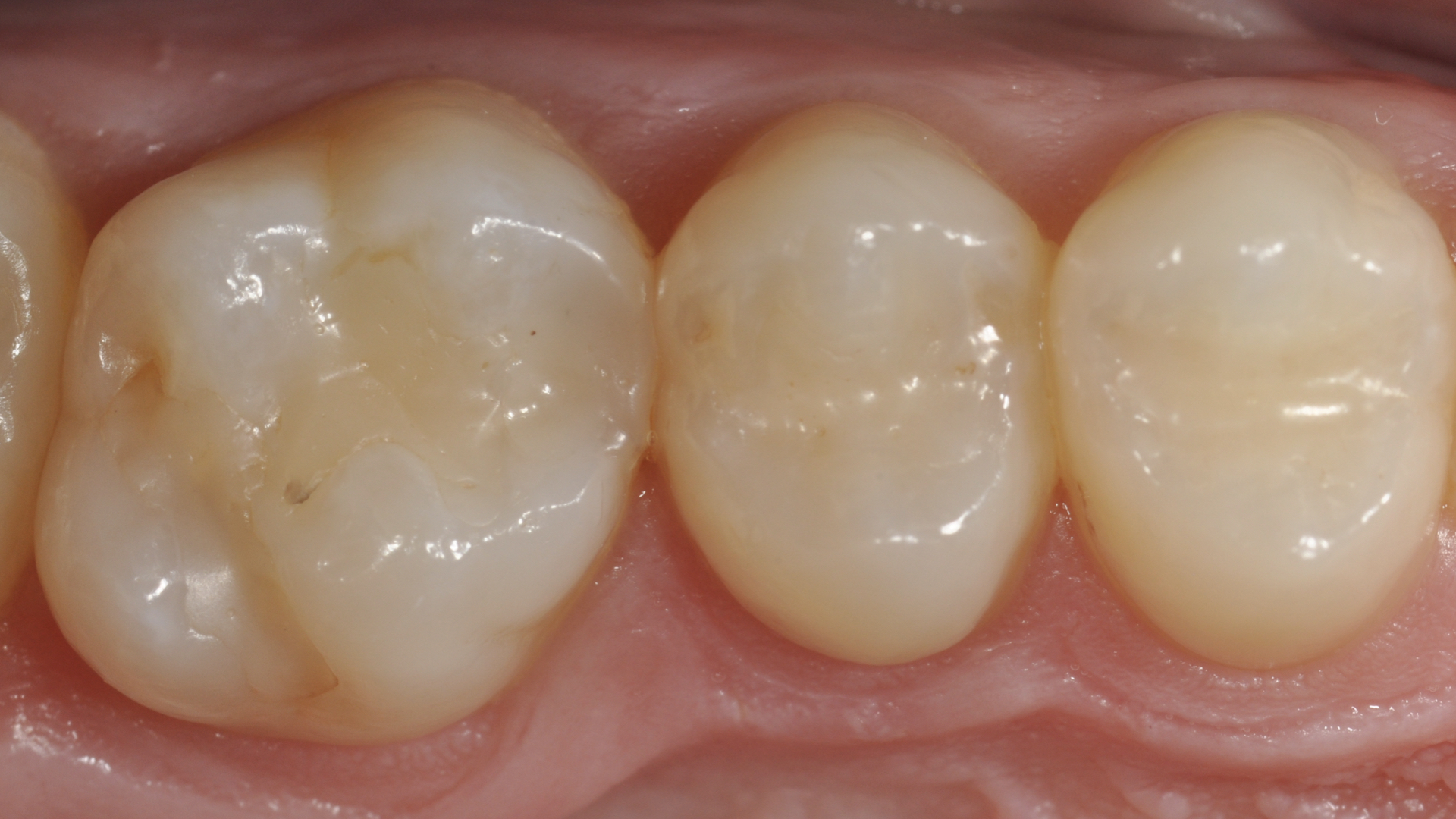
Picture 1
Initial clinical picture: caries of the distal surface of tooth 1.4, detected by x-ray.
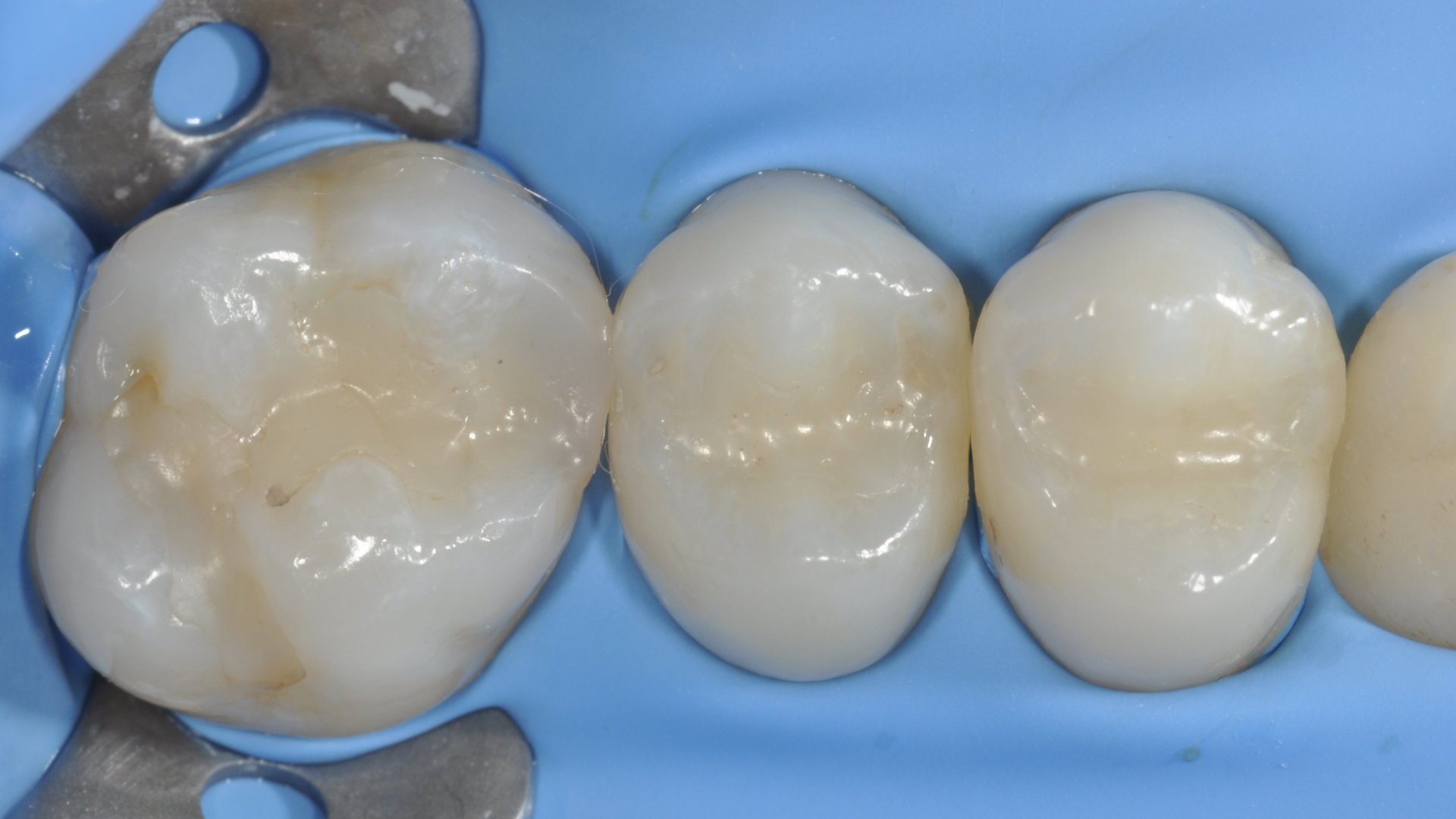
Figure 2
Isolation with a rubber dam from the first molar to the central incisor, clasp 27N. We always place wedges before opening the cavity. When using them, the approximal surfaces of the teeth are visualized, which makes it possible to determine the boundaries of the carious cavity and push back the interdental papilla. This prevents the dam from being damaged by the burr.
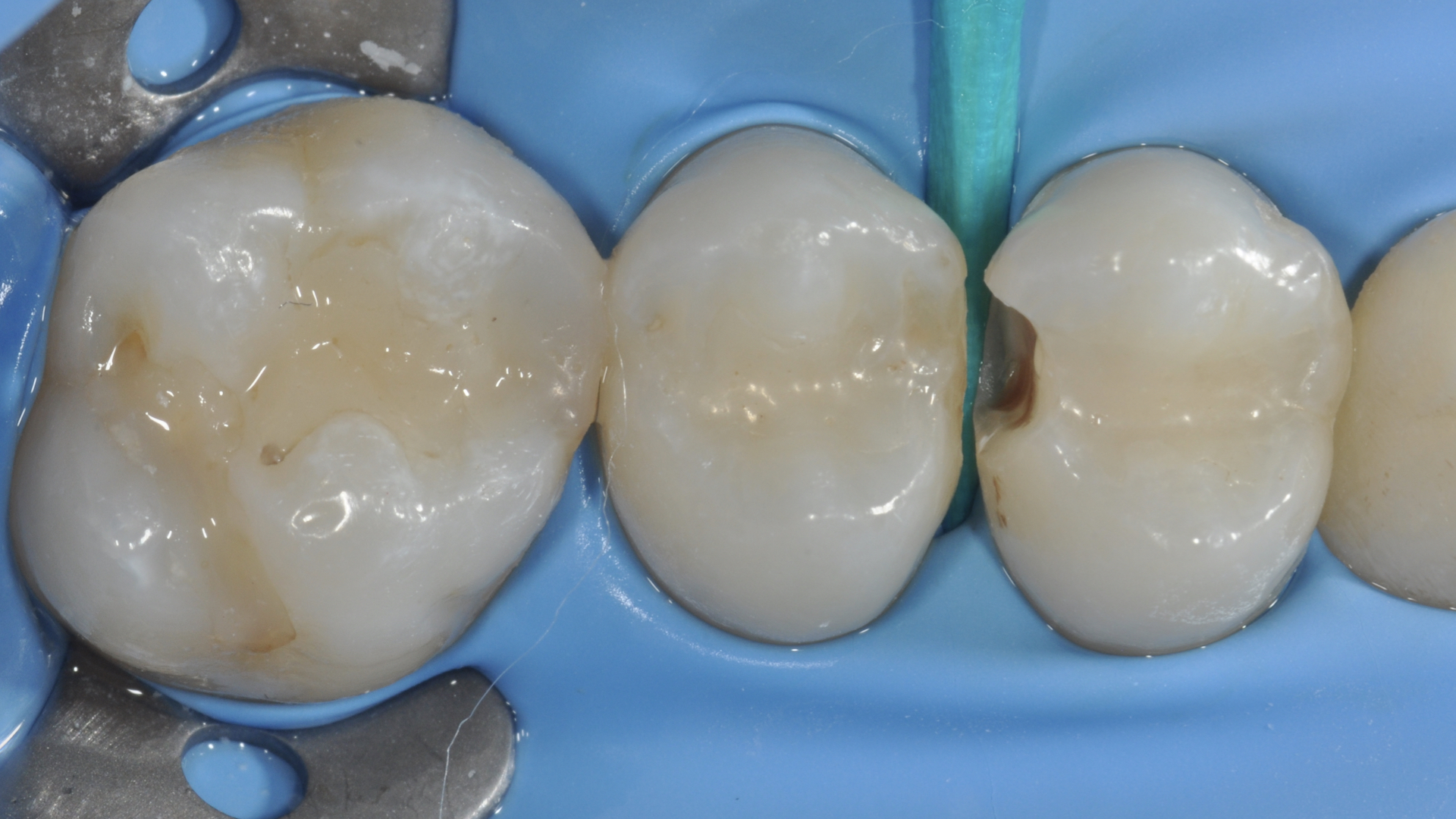
Figure 3
The tooth tissue is prepared with a cylindrical diamond bur at high speed with water cooling to the border of healthy enamel. We will now continue deep cleaning the cavity.
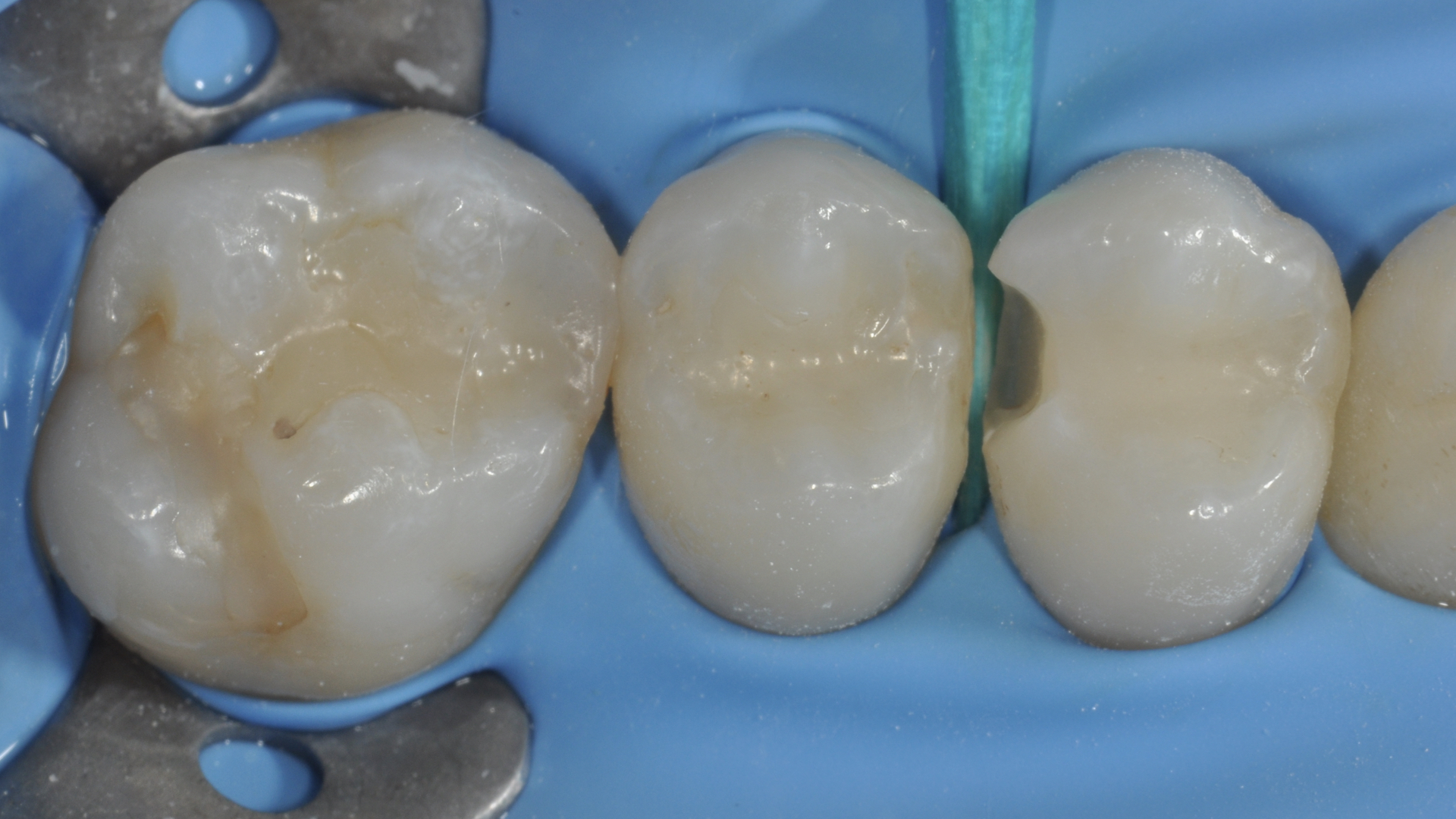
Figure 4
Appearance of the cavity after microinvasive preparation. A gentle preparation was carried out with a ball bur at low speed without water cooling, but without heating the dentin. AquaCare was used for final cleaning.
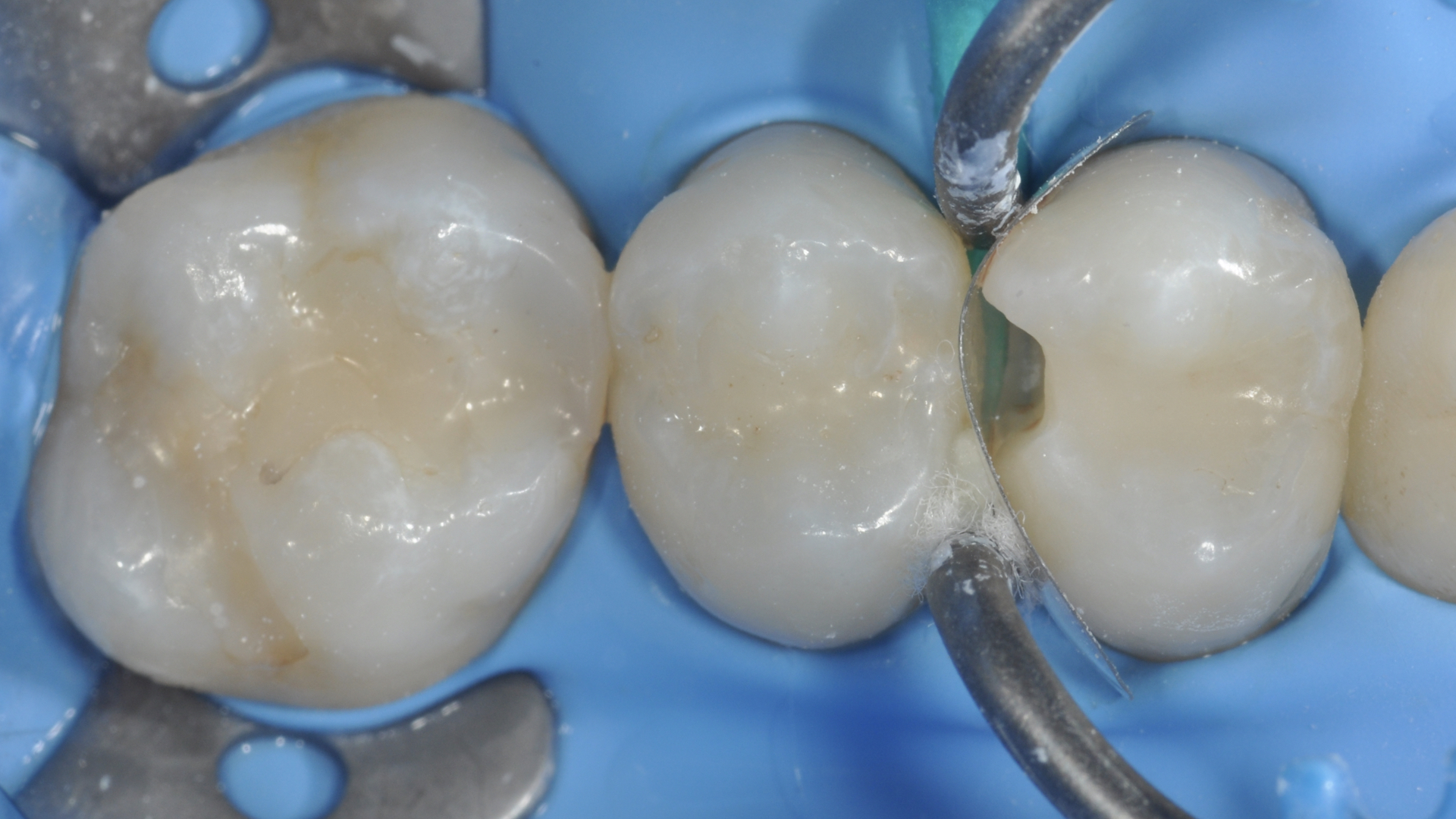
Figure 5
A transparent matrix is installed. To better adapt the matrix on the palatal side, a cotton ball was used (ease of use and extreme efficiency).
An additional strong NiTi ring (MyRingClassico, Polydentia) was required to create the contact point.
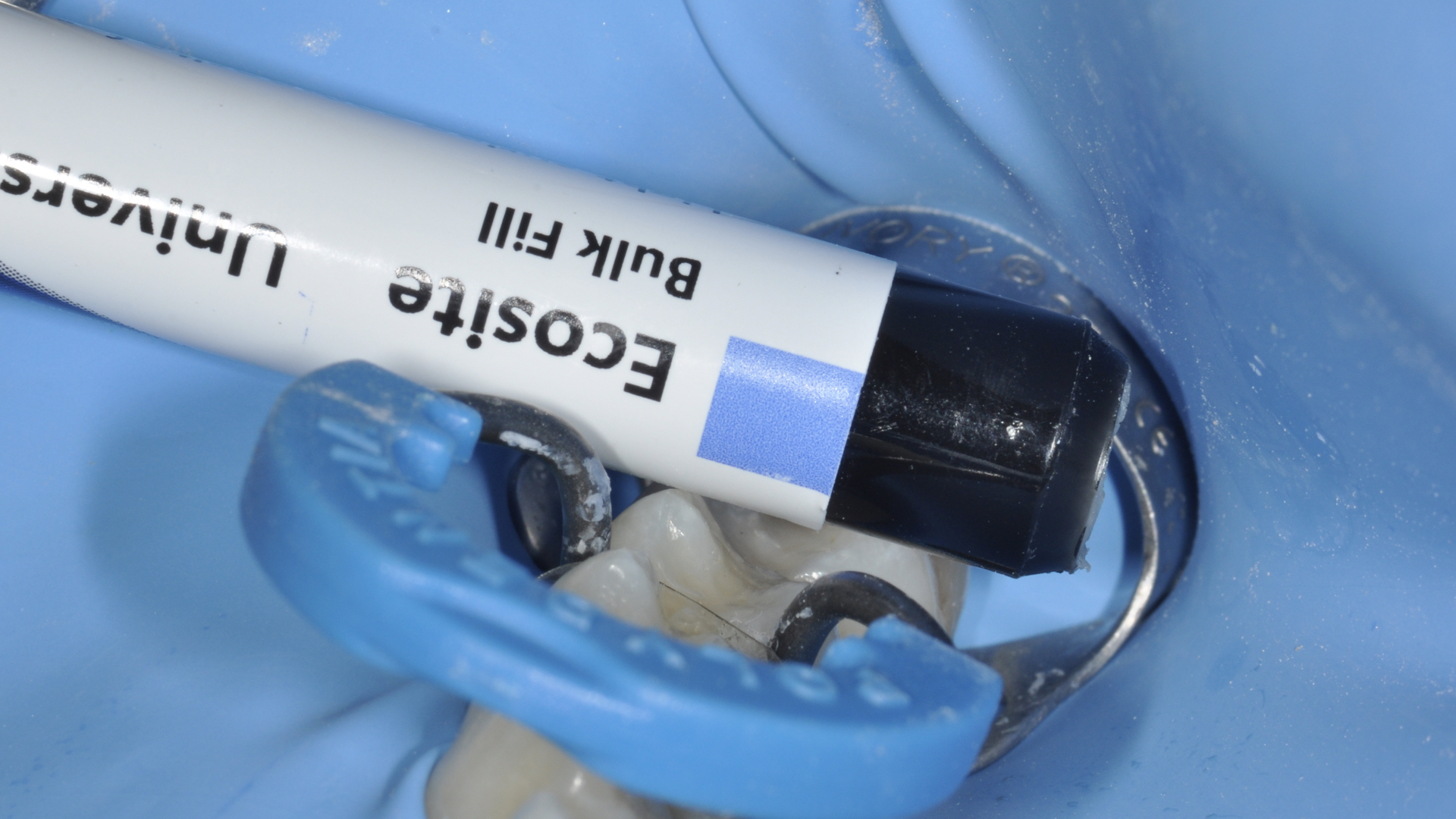
Figure 6
Due to the geometry of the cavity (very narrow, but very deep), layer-by-layer application is difficult. Bulk-fill material, which can fill the entire cavity (up to 4-5 mm) in one portion, is the optimal choice.
This method of application significantly saves the dentist’s time.
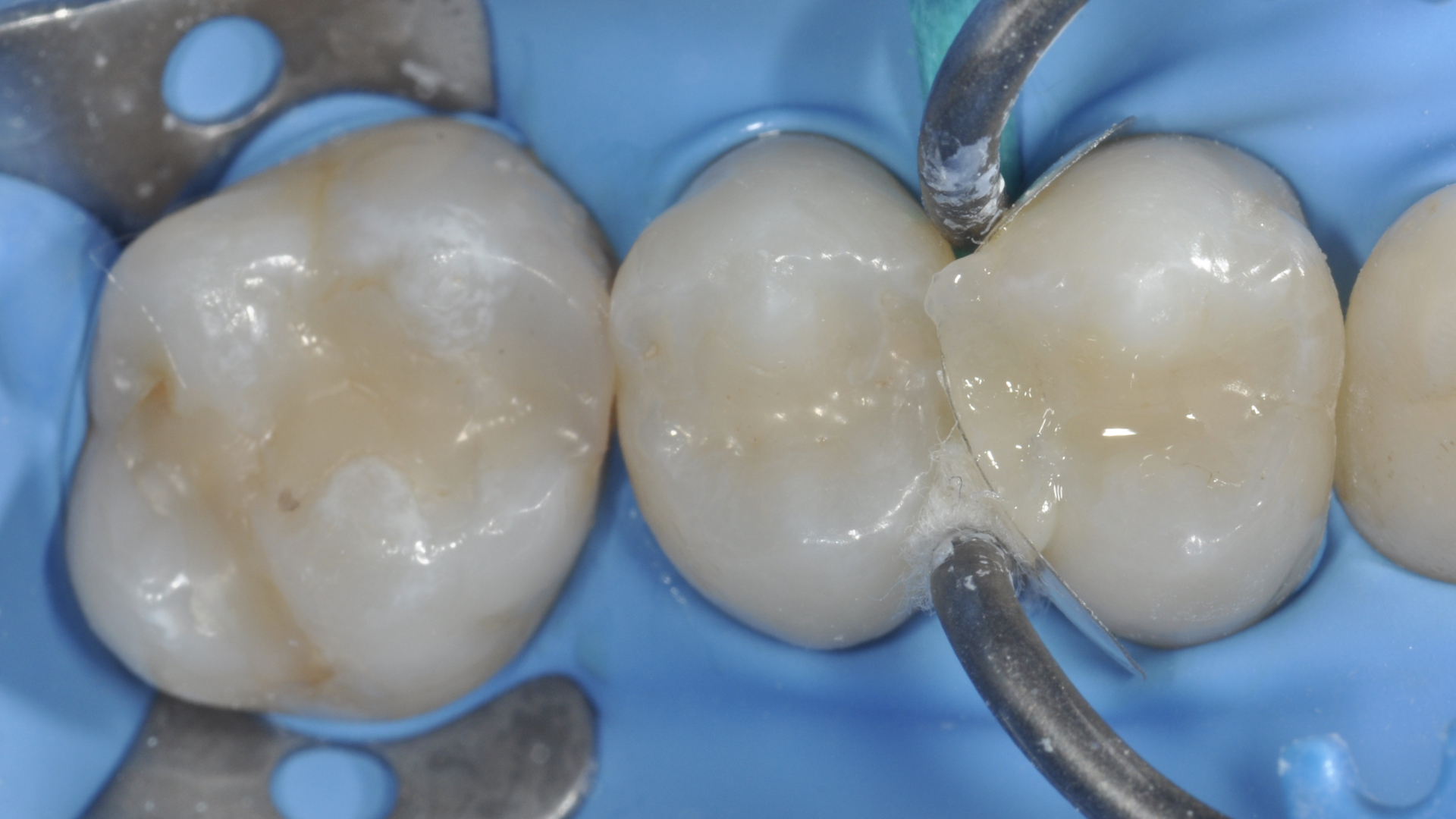
Figure 7
After adding a portion of bulk-fill material, we remove excess and correct the anatomy. At this stage, the good physical properties and workability of the material should be noted.
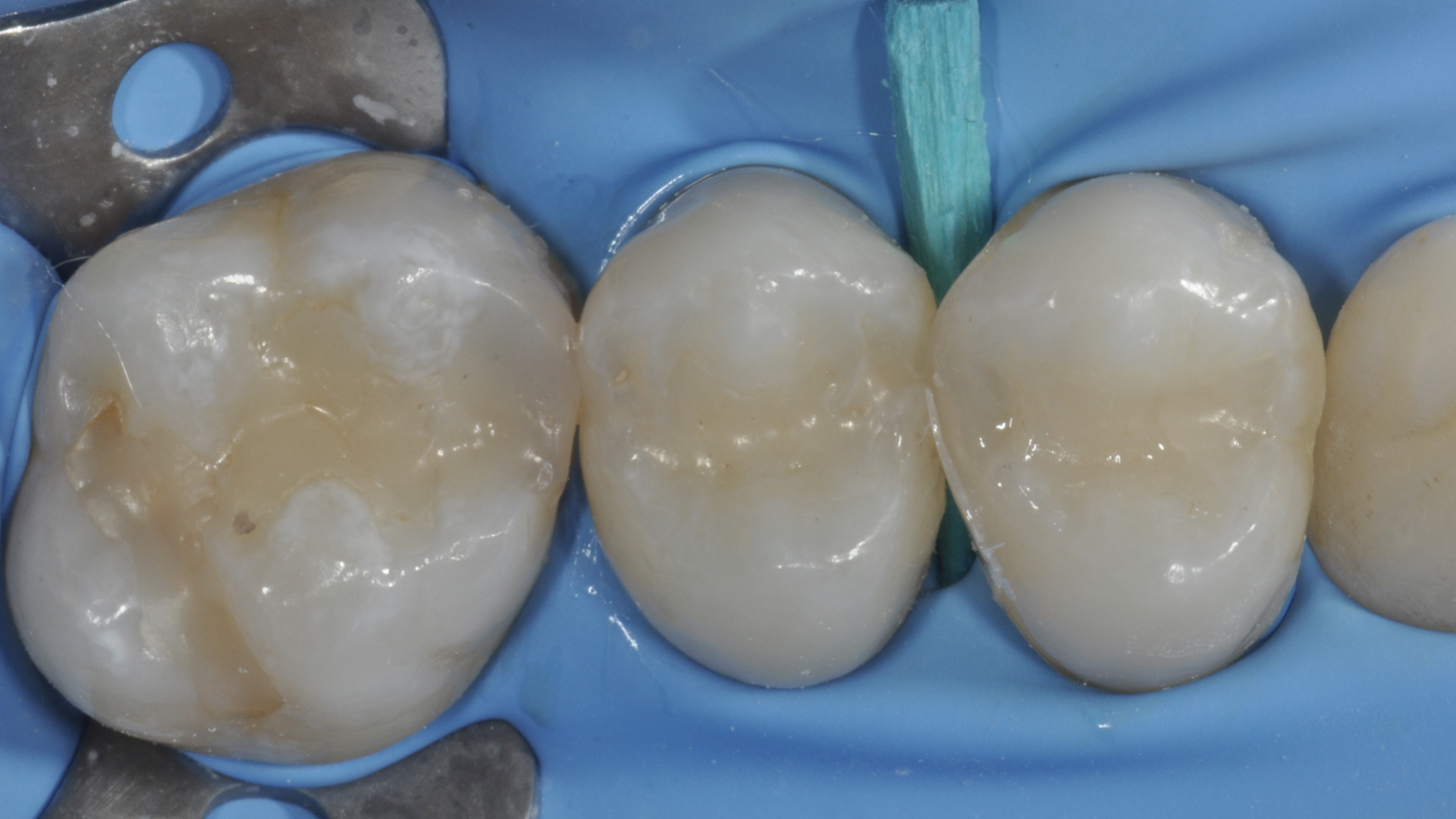
Figure 8
In most cases, the material integrates very well with the tooth structure, sometimes superior to hybrid composites. The grinding and polishing protocol is the same as for hybrid materials; a shiny surface of the restoration is not difficult to achieve.
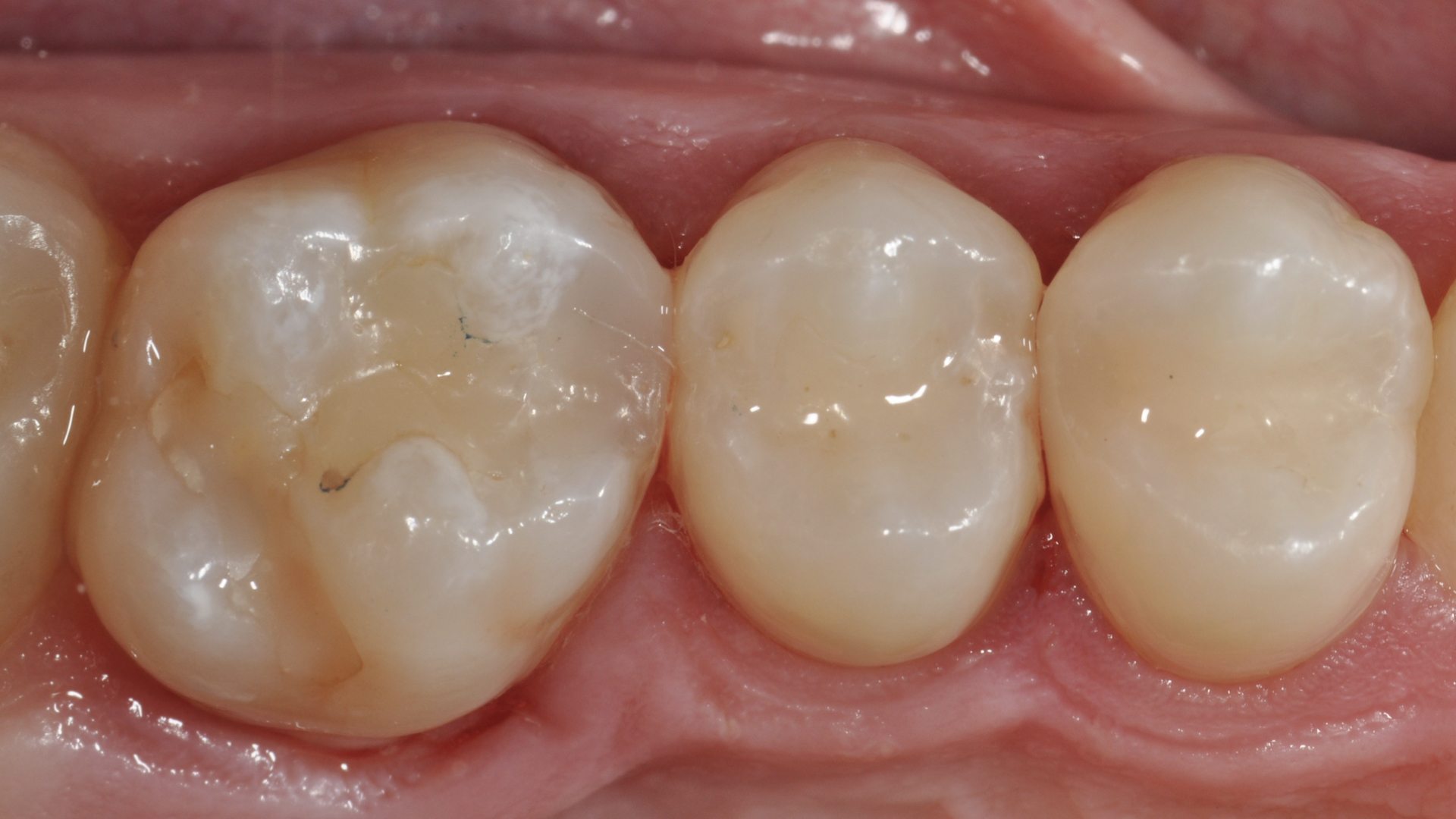
Figure 9
The optical properties of this composite are very similar to hybrid composite materials.
The patient is scheduled for a visit to take control images.
Bulk-fill material
It is widely known that bulk-fill composite materials are suitable for filling chewing teeth. However, bulk-fill material is especially suitable for minimally invasive restorations, as demonstrated in this clinical case. The geometry of microcavities complicates the work with conventional layer-by-layer application techniques. The ability to apply the entire portion of material at once has technical advantages and saves time.
In today's difficult times for dentistry, this more cost-effective approach is very convenient.
DMG Ecosite Bulk-Fill is easy to model, polish, and has high optical properties, which makes it easy to achieve the same results as when using hybrid composites. Placing all the material in one batch is a commonly used approach in our daily practice of fabricating direct restorations.
Learn more about the restoration of posterior teeth at the webinar Direct restoration of posterior teeth using the technique of stress-reduced direct composite restoration .
http://www.styleitaliano.org/